Bhoot Bangla Movie Review – Bhool Bhulaiyaa Remix without Magic
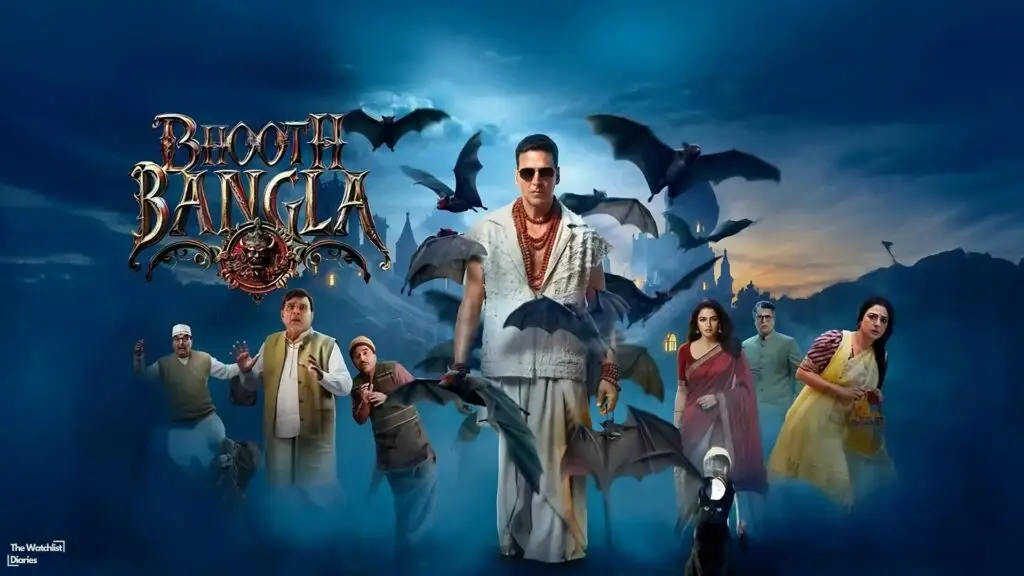
For every ’90s kid and 2000s movie buff, comedy once had a simple formula — Akshay Kumar + Priyadarshan. A pairing that delivered some of the most loved entertainers of an era. Something many thought would never happen again finally became reality as the iconic actor-director duo reunited after 16 years for Bhoot Bangla.
But after a gap of nearly one and a half decades, do they still have the magic to pull off a solid horror-comedy, or is this reunion simply riding on nostalgia? Let’s decode it.
What’s It About?
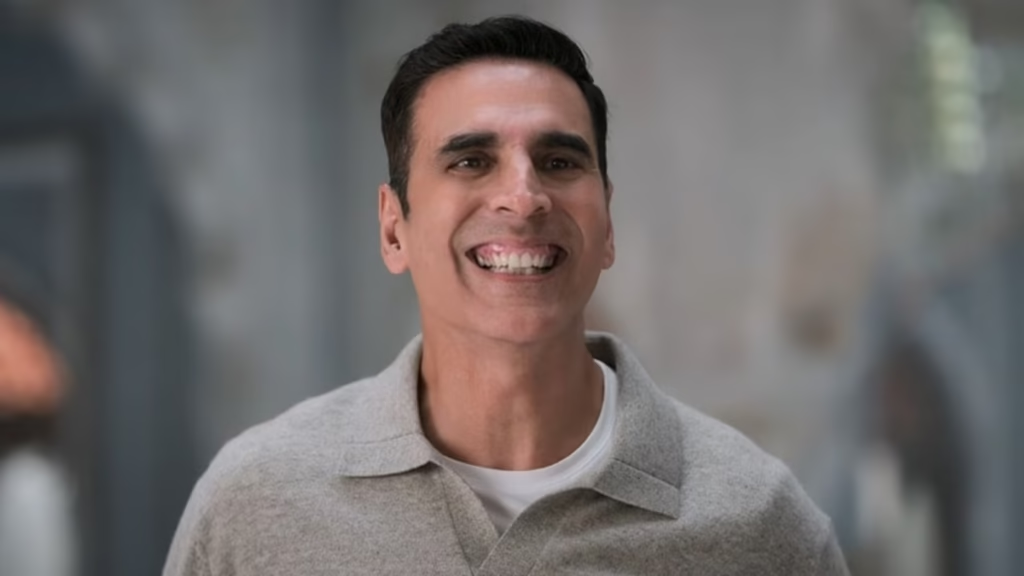
Rumored to have originated as Priyadarshan’s early concept for a Bhool Bhulaiyaa follow-up, Bhoot Bangla revolves around Arjun (Akshay Kumar), a man who unexpectedly inherits a sprawling ancestral mansion in a remote rural town. Hoping to turn the occasion into a family celebration, he decides to host his sister’s wedding there.
However, the town carries a chilling legend. Locals believe the place is haunted, cursed by a dark incident from the past, and no marriage can take place there without inviting disaster. As wedding preparations begin, strange occurrences, eerie secrets, and comic chaos start unfolding, forcing Arjun to uncover the truth behind the curse.
I am diving right into the review now.
What Works?
The Return of the OGs
One of the film’s biggest strengths is simply seeing the old magic-makers reunite. Priyadarshan once gave Hindi cinema one of its most beloved comic combinations in Akshay Kumar and Paresh Rawal, and watching them share screen space again feels instantly nostalgic. Their timing, chemistry, and effortless banter still carry enough charm to remind audiences why this pairing worked so brilliantly in the first place.
For longtime fans, this reunion alone feels like an event. It taps into the era when clean, situational comedy and quirky character interactions ruled mainstream entertainment.
The film also smartly brings back familiar comic veterans like Rajpal Yadav and the late Asrani, giving them moments that play to their strengths instead of wasting them in blink-and-miss appearances. Their presence adds warmth, familiarity, and flashes of the classic ensemble madness audiences were hoping to see again.
Comedy
With a cast packed with seasoned comic performers, laughter is almost guaranteed—and for the most part, the film delivers. Akki slips comfortably back into his familiar zone, proving once again why he remains one of mainstream Hindi cinema’s most dependable comedy stars. His timing is sharp, his reactions are precise, and his trademark deadpan mockery lands some of the film’s easiest laughs.
What works even better is that each performer brings a distinct comic flavor instead of everyone chasing the same punchline. Rajpal Yadav relies on his expressive face, nervous energy, and impeccable reactions to generate instant giggles. Paresh Rawal shines through witty one-liners, confusion-driven humor, and the kind of situational comedy he has mastered over the years.
A pleasant surprise is the light-hearted banter between the late Asrani and Kumar, which carries an old-school charm. Their exchanges may feel simple, but they evoke the classic ensemble humor that many viewers have missed for years.
Sets
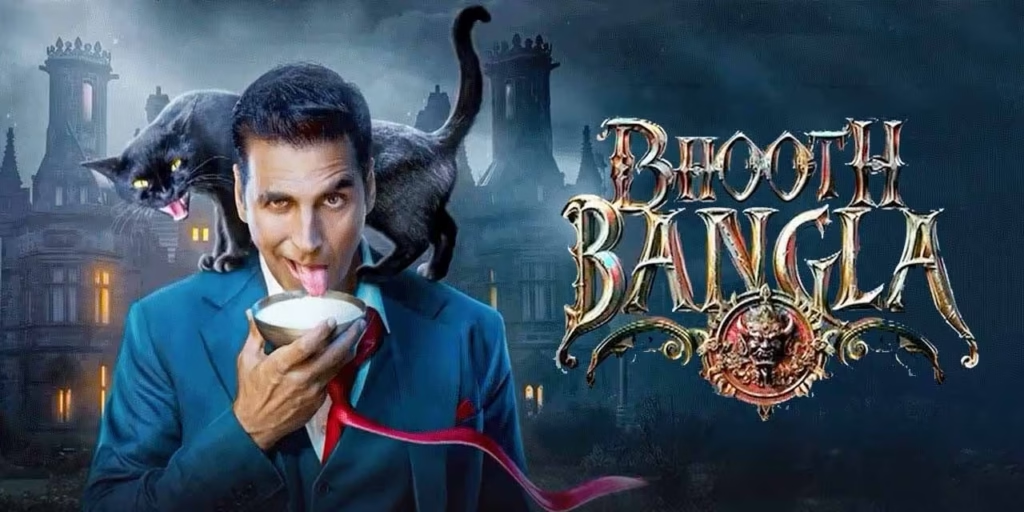
The production design is a slightly tricky aspect of the film. At times, the sets can feel visibly artificial and somewhat dated, lacking the polished realism modern audiences are used to. Yet strangely, that very old-school aesthetic also becomes part of the film’s charm.
There is a distinct throwback quality to the visuals that instantly recalls the atmosphere of BB1. The sprawling mansion interiors, long corridors, oversized rooms, and shadowy corners carry a familiar spooky-comic energy that fans of that era will likely appreciate.
Even more appealing are the outdoor village portions. The open spaces, quiet lanes, and rustic surroundings create a simple, peaceful vibe that feels refreshing in an age where many recent Bollywood films rely heavily on glossy urban backdrops or over-stylised visuals. It may not always look premium, but it certainly has personality, and sometimes that matters more.
Music
Music does not dominate Bhoot Bangla, but whatever the soundtrack offers is far from forgettable. Instead of stuffing the narrative with unnecessary songs, the film uses music sparingly, making each track feel more purposeful within the overall flow.
The title number, “Ram Ji Aake Bhala Karenge,” is an energetic, foot-tapping track that instantly revives the lively screen presence fans associate with Akki. It carries a playful vibe and injects some welcome momentum into the film.
On the softer side, Arijit Singh’s “Tu Hi Disda” stands out as the emotional high point of the album. Melodic, heartfelt, and easy on the ears, it is one of those tracks that lingers after the film ends.
The soundtrack also leans into nostalgia with several musical callbacks. “O Sundari” evokes memories of the fun, peppy energy associated with songs like “Let’s Rock Soniye,” giving longtime viewers a pleasant flashback to that classic era of comedy entertainers.
Then comes “O Ri Sanwariya,” a clear attempt to recreate the haunting appeal of “Mere Dholna”. Whether it truly captures that same magic or not is something audiences will have to decide for themselves.
Dialogues
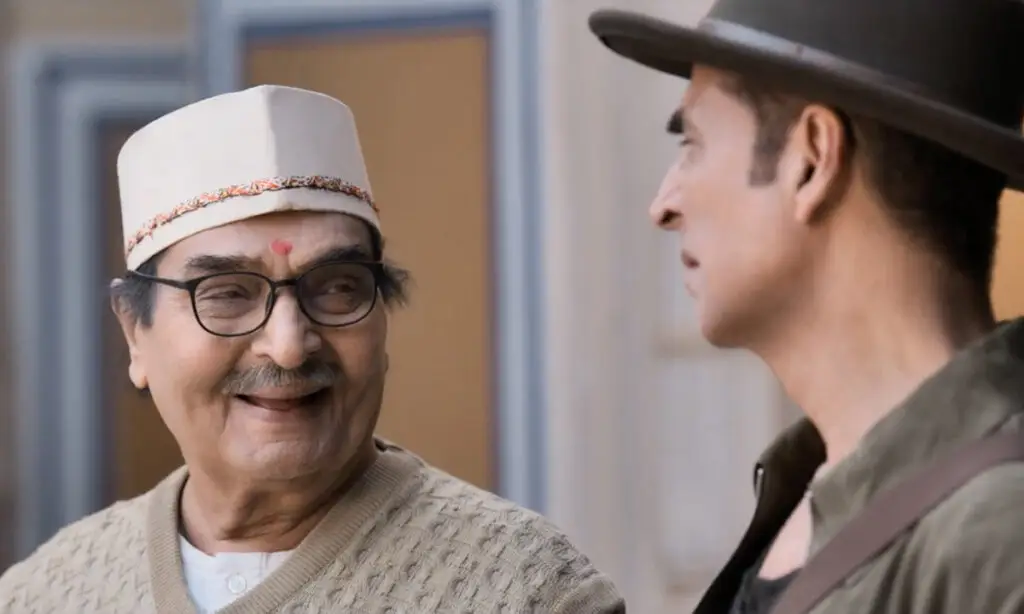
One thing many recent Bollywood horror-comedies have lacked is the kind of memorable, repeat-worthy dialogues that once defined the genre in the early 2000s. In recent years, many films have leaned too heavily on adult humour, cheap gags, or vulgar punchlines. Bhoot Bangla, however, makes a conscious effort to bring back cleaner, louder, crowd-pleasing comedy rooted in timing and writing rather than shock value.
Priyadarshan fills the film with lines designed to trigger instant laughter in a packed theatre, and several moments feel like affectionate callbacks to the comic universe he helped create over the years. There are scenes that clearly echo the madness of Hera Pheri, including a moment reminiscent of the iconic “Khopdi tod saale ka…” energy that fans will immediately recognise.
Elsewhere, certain sequences carry shades of Bhagam Bhag, especially in the confusion-driven humour and escalating chaos. These references never feel accidental; they are placed as nostalgia triggers for longtime fans who grew up on that era of Hindi comedy.
That said, this style of humour works best in a communal setting. It is the kind of film that benefits from whistles, shared laughter, and a crowded cinema hall reacting together. Watched alone, some moments may feel lighter than intended, but in a theatre full of people, the dialogues are likely to land far better.
What’s Not Good?
Script
The biggest weakness of the film lies in its script. While the film genuinely tries to package an entertaining mix of horror, comedy, family drama, and mythology, the core story never feels truly fresh. Many of its beats unfold in familiar ways, making it easy to predict where the narrative is headed long before the final reveal.
The mythology angle adds some intrigue on paper, but it is not explored deeply enough to become a standout element. Instead of building a rich backstory or delivering new twists, the film relies on ideas audiences have already seen in several mainstream horror-comedies over the years.
Once the comedy layer is stripped away, the plot feels rather lightweight and stretched. There isn’t enough dramatic tension or emotional weight beneath the humour to keep the story consistently engaging. In many places, it comes across more as a vehicle for comic set-pieces than a tightly written screenplay.
That said, the horror portions are not entirely ineffective. A few jump-scare moments are smartly staged and supported by a solid background score, creating brief bursts of tension that momentarily lift the film whenever the story starts losing momentum.
VFX
The visual effects are another area where Bhoot Bangla clearly falls short. It feels like the makers either did not allocate a substantial budget for VFX or failed to back the film with effects work strong enough to support its supernatural ambitions. In a genre that depends heavily on atmosphere and believable scares, that becomes hard to ignore.
Several CGI-heavy moments look undercooked, and the artificiality is visible in multiple scenes. Instead of enhancing the horror elements, some effects end up reducing their impact because the visuals never fully convince. For viewers used to sharper genre filmmaking, these portions may come across as dated or rushed.
That said, not everything misses the mark. There is a storm sequence in the second half that works reasonably well, both in scale and mood. The combination of sound design, tension, and slightly improved effects helps that scene stand out as one of the film’s better technical moments. Unfortunately, it remains more of an exception than the norm.
Treatment of Female Cast
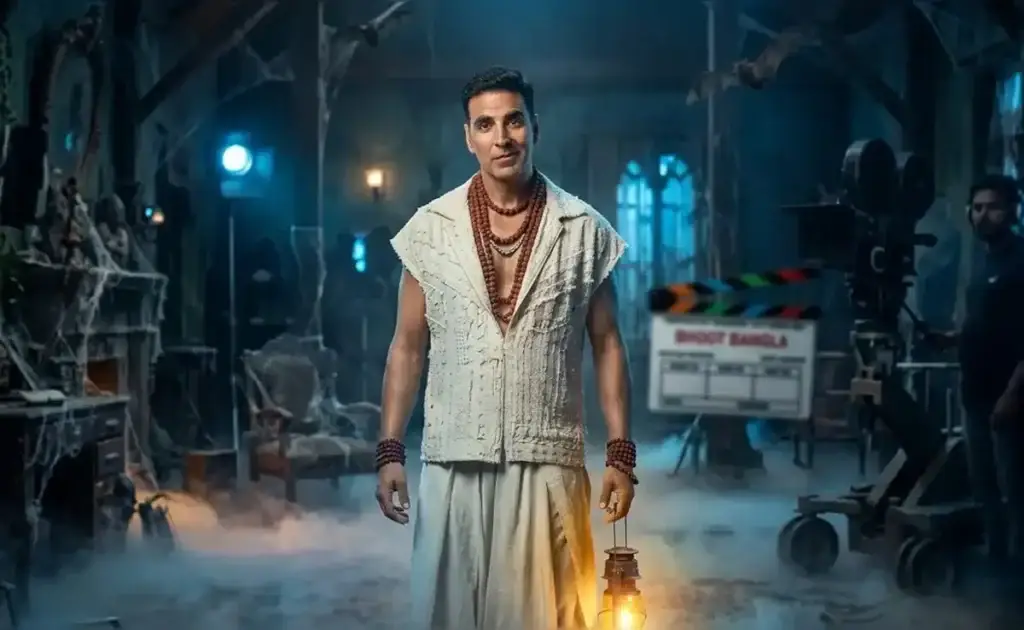
The film doesn’t do much justice to its female characters. Despite having a capable performer like Wamiqa Gabbi, the writing gives her very little to work with. She is mostly reduced to a decorative presence, rather than being an active part of the narrative.
Then there’s Tabu, an actor known for her powerful screen presence. While she performs her part with sincerity, the role itself feels underwritten and somewhat unnecessary. It leaves you wondering why an actor of her calibre wasn’t given something more substantial.
Also worth mentioning is Jisshu Sengupta. His casting feels slightly off in terms of believability, especially in relation to Akshay Kumar’s character. The dynamic doesn’t quite land, making certain moments unintentionally distracting.
Length
The film is extremely long, around 2 hours 53 minutes! I don’t think it needed such a long run time. The first half could have been easily be trimmed by 20 minutes. The initial 15-20 minutes weren’t that funny to me.
Final Words
Ever since the trailer of Bhoot Bangla dropped, expectations were fairly low, and the film didn’t exactly inspire confidence beforehand. But surprisingly, the first half—and large parts of the second- turned out to be enjoyable, largely because of the effortless chemistry shared by the OG comedy veterans.
Watching Akshay Kumar, Paresh Rawal, Rajpal Yadav and others bounce off each other brings back memories of a far more entertaining era of Hindi comedy. Their presence does much of the heavy lifting whenever the script begins to wobble.
That said, the film still lacks the spark and precision that Priyadarshan once consistently delivered in his prime. It doesn’t reach the heights of his classics, but it is far from his weakest work, either.
More importantly, it feels fresher and more enjoyable than the recent formula-driven renditions of Bhool Bhulaiyaa. If you’re looking for a light-hearted, family-friendly entertainer with nostalgia value, this is an easy weekend watch in your nearest theatre.
Rating:
What do you think about this film? Do let us know in the comments below.

Avik
More From Avik

You may also like