Young Sherlock Review (2026): Ritchie’s Bold Holmes Experiment
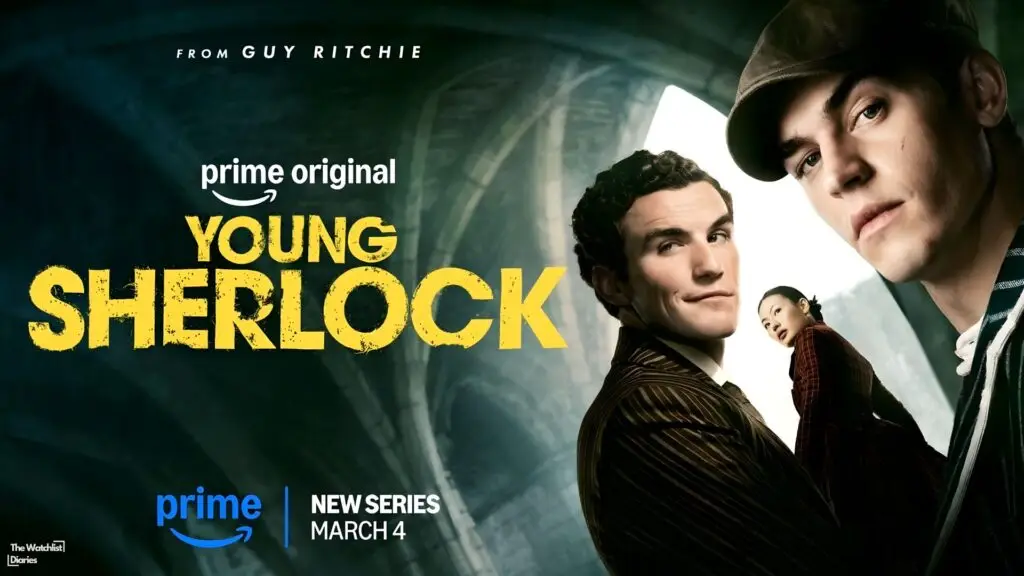
When I saw the new Young Sherlock trailer I was intrigued. After all, a story set during Sherlock’s college days? And Moriarty as a fellow student at Oxford? That alone was enough to catch my attention.
At the same time I was worried about the execution. Sherlock Holmes is one of the most iconic fictional characters ever written. In the last two decades alone we have seen Benedict Cumberbatch redefine the character for television and Robert Downey Jr. turn him into a blockbuster action hero. The bar is high whenever someone attempts a new version of Holmes.
So the real question is simple. Does Young Sherlock manage to stand on its own or does it collapse under the weight of the name it carries? Let’s dig in.
Quick Rundown:
- A fresh but very loose interpretation of Sherlock Holmes
- Strong chemistry between Sherlock and Moriarty
- Several clever deduction scenes and fun chase sequences
- Plot logic occasionally falls apart
- Middle episodes feel stretched and repetitive
- A fun watch if you treat it as a parallel version of Sherlock rather than a faithful adaptation
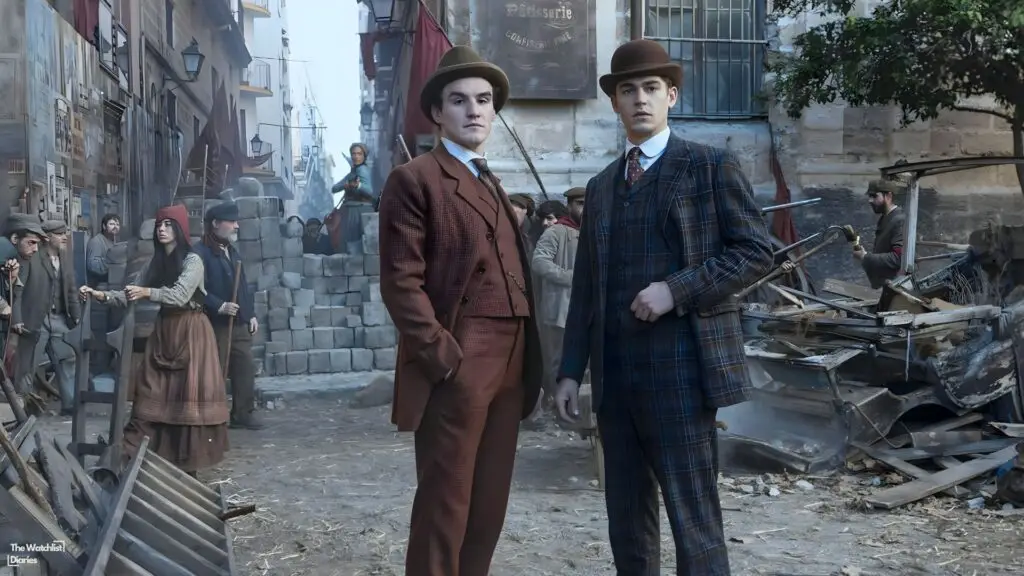
A Sherlock Who Isn’t Quite Sherlock
Guy Ritchie’s version of Sherlock is not the Sherlock most fans expect. If you have read the original Arthur Conan Doyle stories, you will quickly notice that this character shares only a few familiar traits. The wit is there. The deduction skills appear in flashes. The rest feels like a reimagining.
You might even feel tempted to call the show a cash grab that relies heavily on the Sherlock name. That criticism would not be entirely wrong. The show also never tries to hide that it is doing something different. The trailer already made it clear that this was a reinterpretation rather than a traditional Holmes story. And to be fair, the BBC series also took plenty of liberties with the source material. Pastiche and reinterpretation have always been part of Sherlock adaptations. Ritchie simply pushes that idea further.
So before going deeper into the review, a quick warning. If you are hoping to see the fully formed master detective who solves impossible crimes with surgical precision, this show is probably not for you. Save yourself the seven hours.
A Younger, Messier Holmes
Sherlock Holmes here is played by Hero Fiennes Tiffin, and he is very much a work in progress. At nineteen he is not the legendary detective yet. He is reckless, often gets himself into trouble, and even spends time locked up.
He also has a habit of stealing things and cannot always defend himself when someone decides to punch him in the face. This Sherlock is still figuring himself out.
Several familiar characters appear with altered backgrounds.
- Mycroft Holmes (Max Irons) is not yet the powerful figure inside the British government.
- Constable Lestrade (Scott Reid) has not joined Scotland Yard.
- James Moriarty (Dónal Finn) is a scholarship student at Oxford.
And Sherlock himself is not even a student there. He works as a scout at the university and has not yet reached the position of porter. Mycroft is largely responsible for helping him land that job. At Oxford he meets Moriarty and Princess Gulun Shou’an, played by Zine Tseng. From there the story quickly spirals into murder investigations and eventually a global conspiracy.
The Holmes family history also receives a darker rewrite. Sherlock’s childhood was far from happy. His sister Beatrice supposedly died when he was young, and his mother Cordelia Holmes was committed to an asylum after suffering mental breakdowns.
For longtime Sherlock fans, these changes can feel jarring.

Spoiler Section Begins Here
If you have not watched the show yet, this is your warning. The overall concept of the story works on paper. Sherlock is inexperienced and still learning. Early in the show he is framed for murder by Shou’an and has to prove his innocence.
The story then expands into something much larger involving a nerve agent capable of being weaponized in war. The central figure behind the conspiracy turns out to be Sherlock’s father, Silas Holmes, played by Joseph Fiennes.
There is a lot happening here. Since this is still a thriller I will avoid revealing every twist.
Where the Story Trips Over Itself
One recurring problem with the show is something many viewers associate with Guy Ritchie in general. Episodes swing wildly between being genuinely engaging and completely absurd.
Take the early episodes. Sherlock is framed for murder and arrested. Moriarty breaks him out, and the two attempt to locate the professor Shou’an is hunting. That sounds like a standard mystery setup. The problem lies in the execution.
Sherlock and Moriarty manage to identify undercover police officers around the target location but somehow fail to notice Shou’an standing with a clear line of sight on them. Small details like this make the situation unintentionally funny.
Even the broader plan feels vague. After locating the professor, what exactly were they planning to do? They did not have Mycroft ready to coordinate a police trap. The story simply pushes forward until they discover the professor’s research into frequencies.
Another example involves Cordelia’s recording. Shou’an seems to hear only fragments of it, yet she later repeats the message accurately to Sherlock. The show never explains how she knew it was Sherlock’s mother in the first place. These kinds of shortcuts appear repeatedly.
The Moriarty Factor
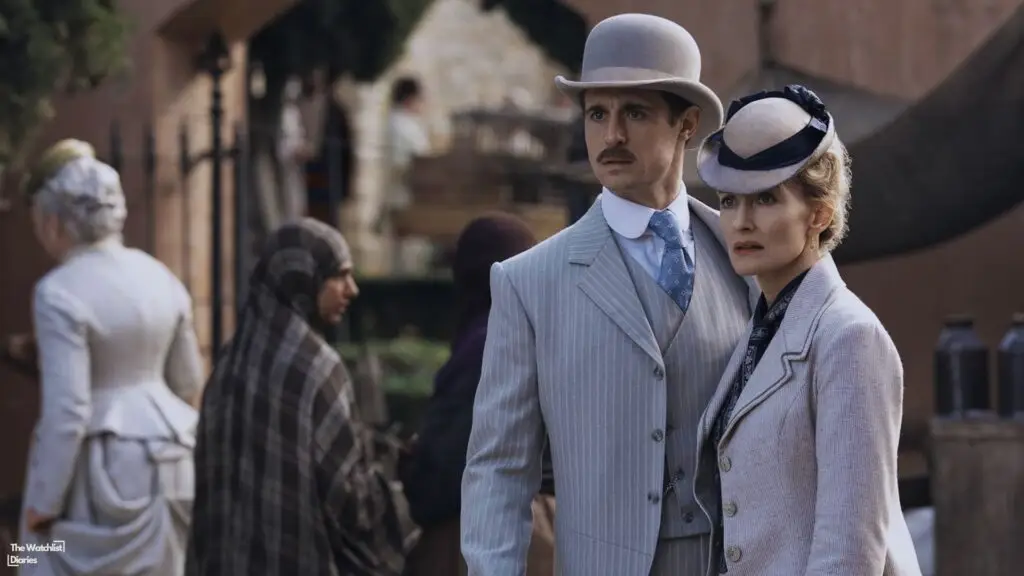
Despite its problems, the show has one element that works extremely well. The relationship between Sherlock and Moriarty. For most of the season Moriarty feels like a louder, more extroverted version of Sherlock. Both characters love solving mysteries. The difference lies in how they view consequences.
Sherlock cannot bring himself to knowingly send someone to their death. Moriarty treats the entire situation like a game. Ironically Sherlock is the one who delivers the famous line “The game’s afoot,” yet Moriarty embodies that philosophy far more literally.
The show slowly builds Moriarty’s descent. His admiration for Silas Holmes becomes increasingly obvious. He wants power and influence. He wants to control the board rather than simply play on it.
One moment even highlights the parallel. Earlier Sherlock jokingly asks Moriarty if he sees himself as a king. Moriarty responds that he might. Later Silas Holmes expresses a similar belief about himself being a king who can shape peace.
Subtle details like this kept you invested.
When the Show Starts Dragging
Beyond the Sherlock and Moriarty dynamic, the series struggles to maintain momentum. Shou’an begins as an interesting character driven by revenge. Over time she feels repetitive. The later episodes slow down considerably. It almost feels like the story had to stretch itself to reach eight episodes.
The plot moves from full speed to a crawl before finally picking up again near the end. Exposition is necessary in character driven stories. Repeating the same character beats over and over is not. The show repeatedly reminds the audience that Moriarty hates being treated as Sherlock’s sidekick. After the third or fourth reminder, the point has already been made.
Beatrice’s character arc also raises questions. Her sudden shift in attitude toward her manipulative father weakens the idea that she rivals Sherlock in intellect. If the show had leaned fully into the idea that she was coldly calculating her own rise within Silas’s operation, the arc might have worked better. Instead the emotional motivations feel inconsistent.
Historical Accuracy Is Not the Priority
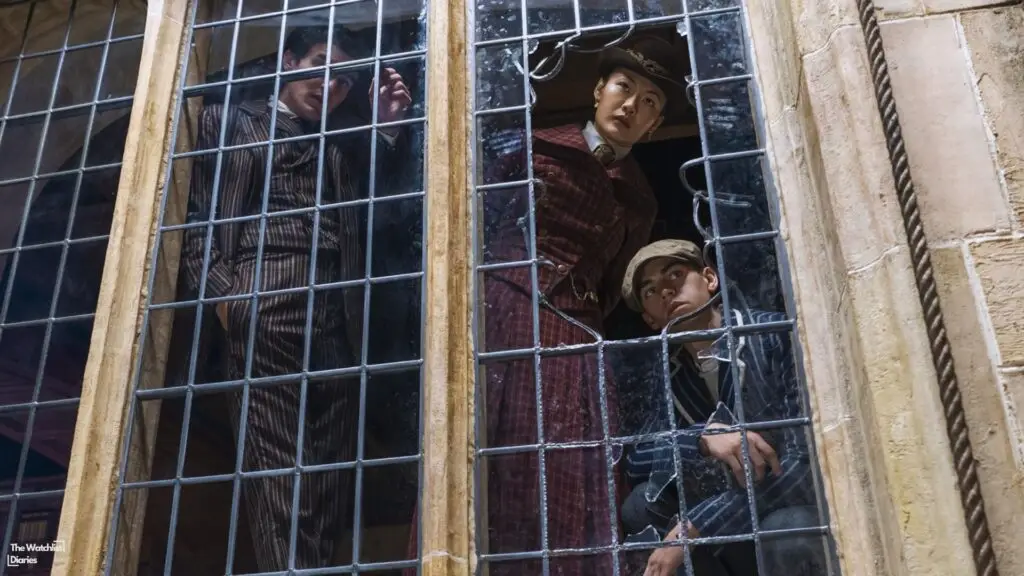
Some viewers will likely notice historical oddities. Oxford admitting women in the 1870s to pursue special degrees, a Chinese princess traveling without attendants, nerve agents delivered by rockets decades before such weapons were accurate or even practical.
Personally I chose not to dwell on these details. The show clearly operates in a stylized version of history rather than a strictly accurate one. Most viewers probably will not even notice these inconsistencies unless they go out looking for it.
The show becomes far more enjoyable once you stop treating it as a direct Sherlock Holmes adaptation. Think of it as a parallel universe version of the character. A young detective who shares the name and some familiar traits but lives in a slightly different world. Once I approached the series that way, I had a much better time watching it.
Final Verdict
I ended up enjoying Young Sherlock, even with its flaws. Mystery stories tend to expose small logical gaps more easily than other genres, and this show has quite a few of them.
Rating:
I will give it a rating of 3.5 out of 5 stars. Still, it remains an entertaining weekend watch. Hero Fiennes Tiffin and Dónal Finn both deliver strong performances and feel like actors who will go far.

What About A Season 2?
Surprisingly, I am looking forward to a second season. The latter half of the show may have dragged, but it succeeded at something important. It made me curious about the eventual betrayal between Sherlock and Moriarty.
The dynamic reminded me a little of X-Men: First Class and the early friendship between Professor X and Magneto. If the writers can capture even half of that tension, the next season could be much stronger.
There is also another character whose arrival I am waiting for. John Watson.
Sherlock is often portrayed in the show, as someone who had no true friends before meeting Moriarty. When he eventually meets Watson, watching that relationship develop juxtaposed against the one with Moriarty could be one of the most interesting directions the series can take.
What Did You Think?
Did Young Sherlock live up to your expectations? Did the reinterpretation work for you, or did the distance from the original stories bother you? Let us know in the comments.
Young Sherlock is now streaming on Prime Video. And if you enjoy deep dives like this, check out more reviews and breakdowns here on The Watchlist Diaries.
You may also like