Main Vaapas Aaunga Review – Is This Imtiaz Ali’s Best Film?
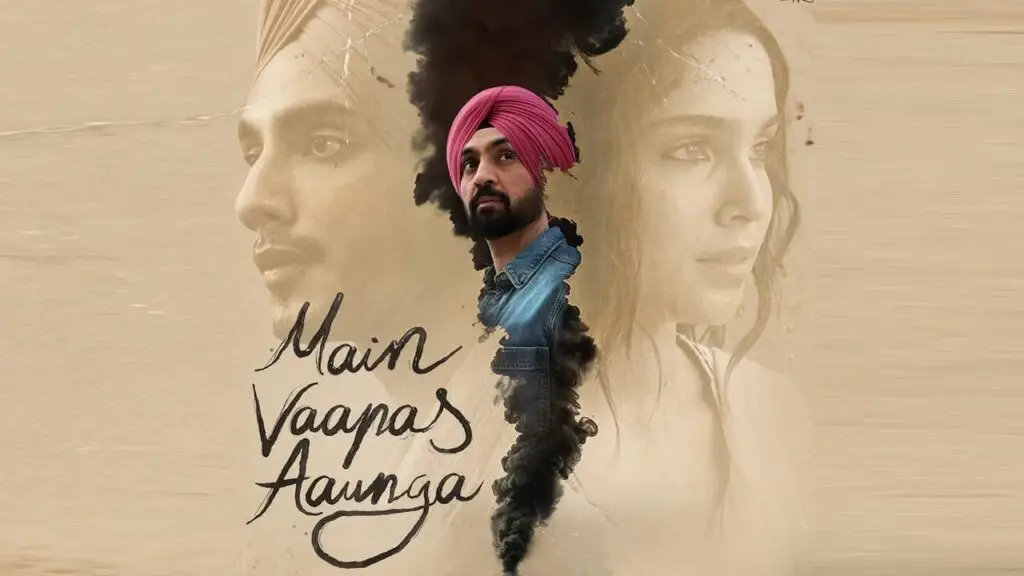
Before I begin, let me apologise for being late to the Main Vaapas Aaunga party. I wanted to watch the film in theatres when it released, but the limited number of shows and, frankly, some rather odd timings made that impossible. Thankfully, Netflix came to the rescue, and after finally watching it, I knew I had to talk about it.
Some films arrive with little noise. No massive marketing campaigns, no deafening promotions, just a trailer, a talented cast, and eventually, word of mouth. Main Vaapas Aaunga is one such film.
The film has quietly built a strong reputation among those who have watched it, and with a cast featuring Naseeruddin Shah, Vedang Raina, Sharvari, and Diljit Dosanjh, along with music by the legendary AR Rahman, it certainly had all the ingredients for something special.
However, I’ll be honest, I wasn’t particularly impressed by the trailer.
Having now watched the film, I am more than happy to admit: I was wrong.
Let’s get into it.
What’s It About?
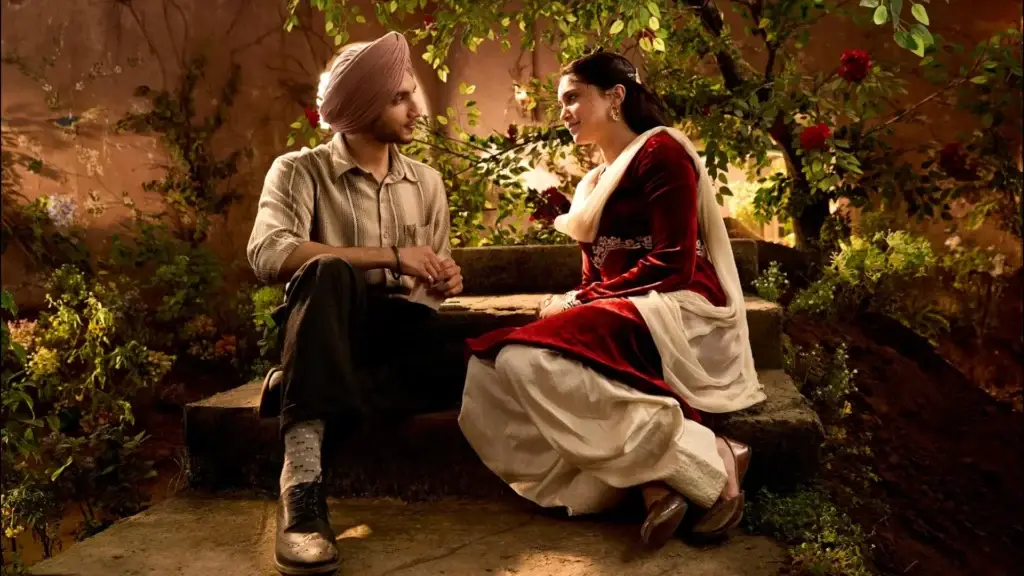
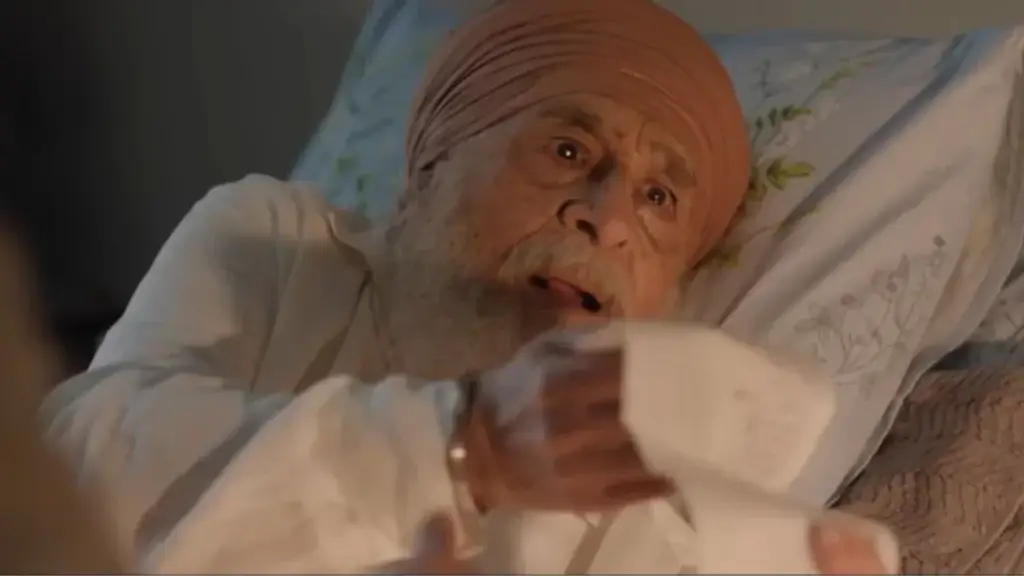
The story revolves around Keenu, played by Vedang Raina and Naseeruddin Shah at different stages of his life.
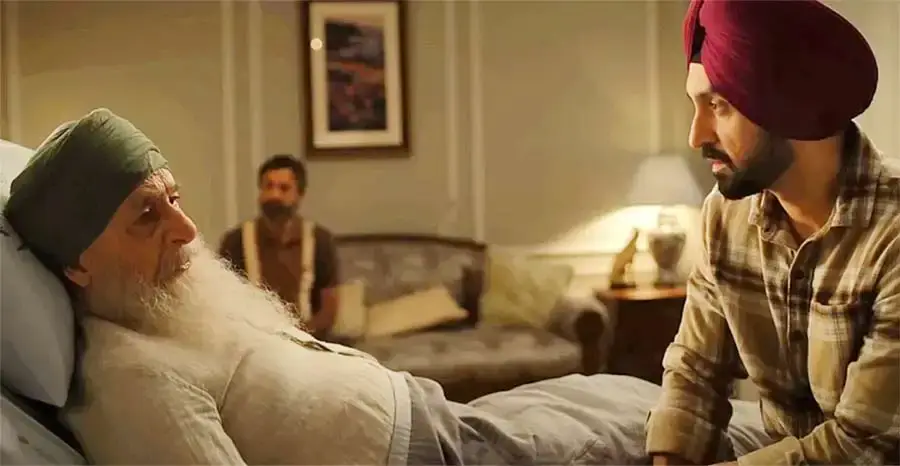
Keenu is an elderly man suffering from dementia and lying on his deathbed. But despite being at the end of his journey, he cannot find peace because of an unfinished wish from his past.
His life has been anything but easy, shaped deeply by the trauma and consequences of the Partition of India and Pakistan.
Now, his family, most importantly, his grandson Nirvar, played by Diljit Dosanjh, sets out to connect the missing pieces of Keenu’s past and fulfil his final wish.
Will he succeed?
I’ll leave that for you to discover.
What Works?
Naseeruddin Shah – An Acting Masterclass
Let’s start with the obvious.
The film rests heavily on the shoulders of a man who is 76 and still manages to outperform actors decades younger than him.
Yes, I’m talking about Naseeruddin Shah.
Every time he appears on screen, it becomes difficult to look anywhere else. His expressions, body language, dialogue delivery, and ability to communicate emotions without saying much are simply phenomenal.
His performance is the kind that aspiring actors should study frame by frame.
I have been a huge fan of Naseeruddin Shah for years, yet somehow, every new performance makes me feel like there is still so much more to learn from him.
Take a bow, sir. We still have a lot to learn from you.
The Other Performances
Vedang Raina is still relatively new to the industry, but he is evolving at an impressive pace. His performance here is sincere and convincing, and he also gets an opportunity to showcase his singing abilities, which I’ll come to shortly.
Diljit Dosanjh is another pleasant surprise.
I was honestly getting a little tired of seeing him being cast in similar kinds of roles. Thankfully, Main Vaapas Aaunga gives him something different. He tones things down, steps away from his usual larger-than-life persona, and allows the character to breathe.
But for me, the hidden gem of the film is Rajat Kapoor.
When he first appeared, I thought, Oh no, here we go again with another stereotypical character.
But I couldn’t have been more wrong.
His character arguably has one of the most interesting and emotionally satisfying arcs in the entire film.
Writing – Partition Through a Different Lens
Stories about Partition have always haunted me.
I have watched plenty of films based on the subject, and over the years, I have consciously started avoiding them because the trauma and emotional patterns can sometimes feel repetitive. Of course, I cannot even begin to imagine what it must have been like for people who actually lived through those events.
But what makes Main Vaapas Aaunga different is that it doesn’t focus solely on the people who experienced Partition firsthand.
It also explores the generations that inherited its scars.
That is where the film really hits home.
Take Rajat Kapoor’s character, for example. He has never seen his father genuinely happy. He grows up without receiving the love and affection he deserves from his father, yet somewhere deep down, he continues to love him, admire him, and seek his approval.
The trauma has travelled from one generation to another.
And that is perhaps the film’s strongest idea.
The final moments aren’t loud, dramatic, or unnecessarily cinematic. Instead, they are quiet, soothing, and deeply emotional.
Keep your tissues handy.
Music – AR Rahman Does It Again
When you have AR Rahman and Irshad Kamil handling the music, expectations are naturally sky-high.
And thankfully, the soundtrack delivers.
What I particularly liked is Rahman’s decision to move away from simply relying on the usual popular voices and experiment with fresh, lesser-known artists.
The result is a soundtrack that feels fresh and memorable, with several songs finding their way onto music streaming playlists.
I was particularly impressed by Vedang Raina’s verse in Maskara. It genuinely made me wonder what other talents this guy is hiding up his sleeve.
And then there is Tere Paas Main, the obvious crowd-pleaser.
But the real magic lies in how Imtiaz Ali incorporates the songs into the narrative. They don’t feel like interruptions. They feel like extensions of the story.
At times, the film genuinely feels like poetry in motion.
Dialogues – Funny, Poetic and Meaningful
One of the most interesting aspects of the film is how it handles Keenu’s dementia.
As his memories become fragmented, he starts describing his past through strange and imaginative analogies.
For instance, stories about external forces attacking his village are transformed in his mind into tales of Martians attacking the peaceful people of the Moon.
On the surface, these moments can be genuinely funny.
But underneath that humour lies something much deeper.
The dialogues make you realise that these aren’t merely confused memories, they are fragments of a painful past being processed by a mind that can no longer distinguish between reality and imagination.
It’s clever writing.
Now, Let’s Talk About the Negatives
What Doesn't Work?
Sharvari
I know this might not be a popular opinion, but Sharvari’s performance didn’t quite work for me.
She clearly puts in the effort, but I often felt that she was pushing her emotions a little too hard in scenes that demanded more subtlety and restraint.
This is especially noticeable because Imtiaz Ali has previously managed to bring out remarkable performances from his female leads—Alia Bhatt in Highway, for instance.
Unfortunately, I don’t think he manages to extract the same level of nuance from Sharvari here.
Predictable
The ending is beautiful.
But it is also predictable.
You could argue that there isn’t much room for a massive twist in a story rooted in Partition and generational trauma. And that’s fair.
Still, somewhere in the back of my mind, I was waiting for that quintessential Imtiaz Ali twist.
It never really came.
And while I would never claim to understand the pain of people who actually experienced Partition, as a viewer, I felt that Bhaag Milkha Bhaag managed to leave a stronger emotional impact on me when it came to portraying the consequences of Partition.
The Length
The film could easily have been trimmed by 15–20 minutes, particularly during the first half.
The second half is considerably stronger and more engaging, but the overall runtime does make the film feel slightly stretched.
Thankfully, Naseeruddin Shah is there to keep you hooked.
Special Mention – Don't Skip the End Credits!
If you’re watching Main Vaapas Aaunga, DO NOT switch it off when the credits start rolling.
This is where the film has one final trick up its sleeve.
The end credits feature Kya Kamal Hai, performed by Diljit Dosanjh, accompanied by a visually striking music video that carries Imtiaz Ali’s signature touch.
The video expands the film’s themes beyond its central story, touching upon the ongoing global immigration crisis and the devastating impact of war on innocent people.
It is worth watching till the very end.
Final Words
So, is Main Vaapas Aaunga Imtiaz Ali’s best film?
No.
But is it one of his more interesting and emotionally mature films?
Absolutely.
In an era dominated by high-octane action, excessive violence, and gore, Main Vaapas Aaunga feels like a much-needed palette cleanser.
It is gentle without being boring, emotional without being manipulative, and musical without feeling overstuffed.
And if you’re a fan of Naseeruddin Shah, AR Rahman, or Imtiaz Ali, there is plenty here to enjoy.
Rating:
What do you think about this film? Do let us know in the comments below.

Avik
More From Avik
You may also like