
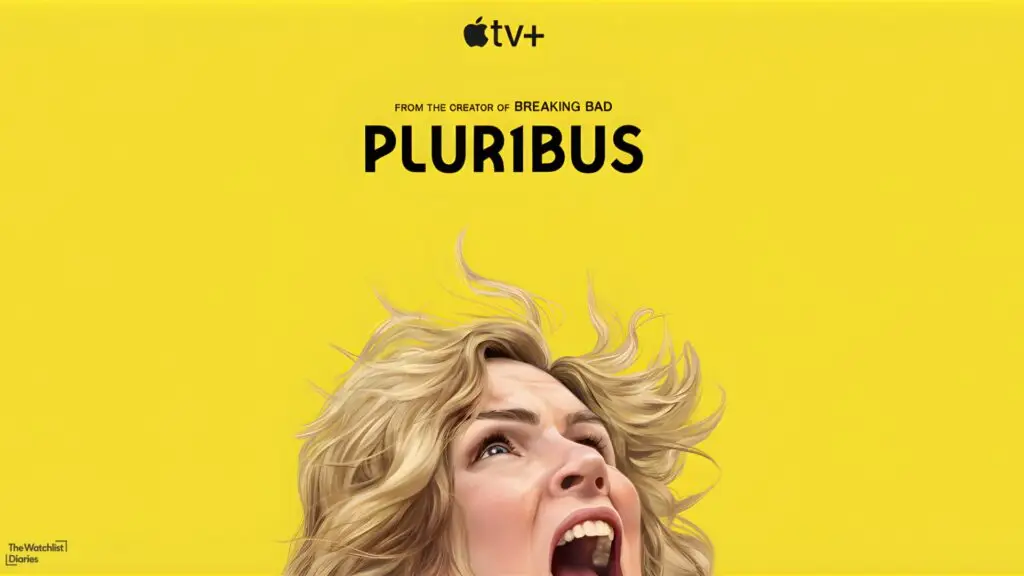
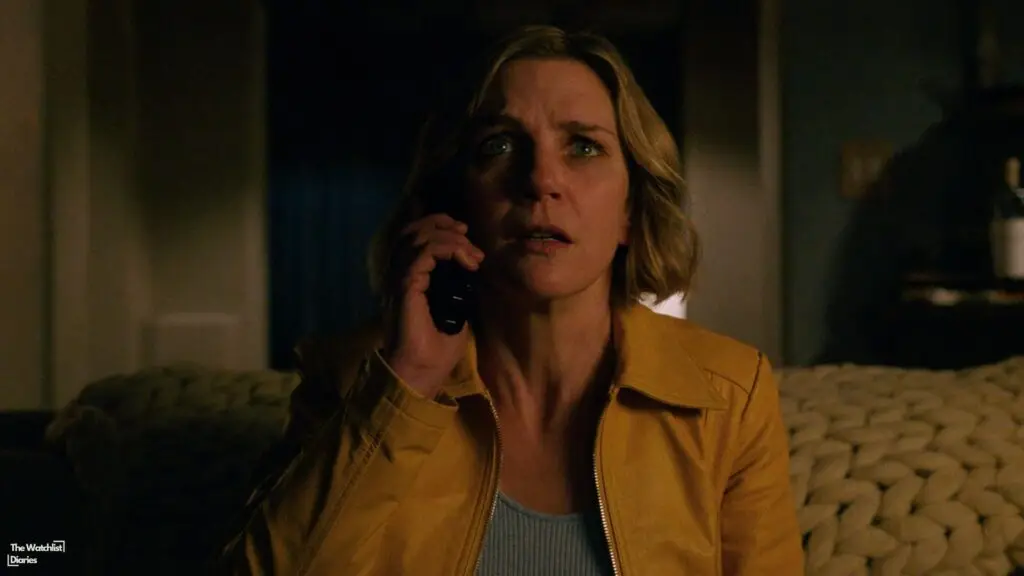








You have probably seen the trailers. Rhea Seehorn’s Carol Sturka sits on a couch, staring at a television, while a suited man speaks directly to her through the screen. He tells her they love her. That her life is her own. Everyone else feels wrong. Too calm. Too agreeable. Almost possessed.
The premise is instantly intriguing. An alien virus links humanity into a polite, ever-smiling hive mind that promises peace, comfort, and happiness. No war. No conflict. No suffering. The cost is individuality. And for a while, Pluribus handles this idea with confidence, style, and genuine tension. Unfortunately, the show also proves how quickly a sharp sci-fi thriller can lose momentum when its story stretches longer than it needs to.
Pluribus is a tale of two halves. The first four episodes are genuinely good. We learn about a deep space signal that delivers the genetic blueprint of the virus to Earth. Once synthesized, it spreads rapidly, infecting everyone except thirteen people, including Carol herself.
The infected are unsettling in the best way possible. They are cheerful, polite, helpful, and completely stripped of individuality. Carol, a character defined by her sense of justice and independence, immediately pushes back. Her emotional outbursts feel human, and watching the hive struggle to process her resistance is one of the show’s most compelling elements.
The other survivors are not cartoonish rebels either. Each of them has their own justification for siding with the hive. They argue for peace, for the end of war, for a world without suffering. The show smartly asks an uncomfortable question early on. At what point does sacrificing free will for global peace stop sounding noble and start sounding terrifying?
During this stretch, Pluribus keeps you locked in. The pacing is tight, the philosophical tension is sharp, and the parallels to modern generative AI are impossible to miss. A system that exists to agree with you, validate you, and never challenge you feels comforting at first. Until it starts withholding truth for your own good.
Then the show hits the brakes. From the midpoint onward, Pluribus shifts almost entirely inward. The focus turns to Carol’s loneliness, her emotional isolation, and the internal conflict between companionship and moral responsibility. None of this is inherently bad. In fact, it makes sense for the story.
The problem is how long the show lingers there. Carol’s emotional spiral stretches across nearly five episodes, and the narrative momentum grinds to a halt. At a certain point, introspection turns into repetition. The show keeps circling the same emotional beats without adding new insight. One episode in particular, which spends most of its runtime following Manousos’ journey from Paraguay to Albuquerque, feels especially indulgent. At nearly fifty minutes, it adds very little to the core plot. Slow burn storytelling can be powerful, but here it crosses into plain stagnation.
Even as someone who was deeply invested early on, it becomes hard to defend the pacing in the second half.
What makes the slowdown more frustrating is how little new information we actually get. By episode four or five, the core rules of the world are already established. By the finale, we still do not know much more than we did halfway through the season.
There are hints that the frequency used by the hive mind could be hijacked, but this idea is barely explored and only vaguely acknowledged in the final episode. The show raises massive philosophical and technical questions, then largely refuses to engage with them.
The hive mind can give Carol grenades and atomic weapons, yet somehow cannot explain a clear path to reversing the infection. It feels less like an intentional mystery and more like narrative avoidance.
The comparison to generative AI is one of Pluribus strongest thematic angles. Most people today have experienced how unsettling constant agreement can be, especially with tools like ChatGPT. A system designed to affirm you, guide you, and never offend you feels helpful at first, until you realize it also decides what you do not get to know.
Now imagine a world like that. Everyone is essentially a ChatGPT, armed with all the knowledge in the world, manufacturing excitement for your interests, acting as the ultimate yes man. It will not harm you or lie to you, but it will withhold answers, because the system has decided that stability matters more than truth.
That idea is genuinely terrifying, and Pluribus understands it. The problem is that the show does not push the concept far enough. Where Black Mirror works is by committing to a full, often uncomfortable resolution. Pluribus raises the right questions, but hesitates when it comes to answering them. This story could have worked brilliantly as a film trilogy or a short limited series. As a nine-episode season, it stretches its ideas thin and hardly tries to go beyond the initial premise and starts to meander.
There is no denying the craftsmanship on display. Vince Gilligan brings his signature visual style back, with wide desert landscapes, clean compositions, and confident direction. The show looks fantastic from start to finish.
But strong visuals alone cannot carry a narrative that feels like it is repeating itself. After a while, you realize you are watching variations of the same episode, just framed differently.
I would rate Pluribus a 3.5 stars out of 5. It starts off bold, intelligent, and genuinely gripping. Somewhere along the way, it loses momentum and struggles to justify its length. The finale finally arrives at a meaningful choice, with Carol deciding to save the world rather than choose personal happiness, but it takes far too long to get there.
Will I watch season two? Probably. The premise is still strong, and with tighter execution, this could become something special.
Pluribus by Vince Gilligan is now streaming on Apple TV+. For more reviews and breakdowns like this click here.