War Machine Review: Netflix’s Loudest Sci-Fi Ride Yet
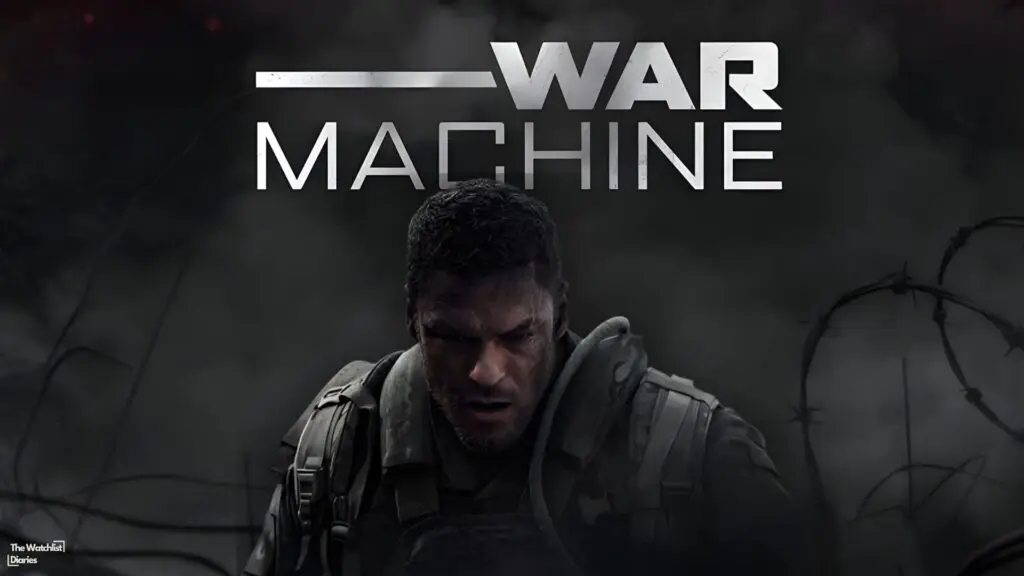
War Machine 2026, starring Alan Ritchson, landed on Netflix in early March 2026 and has spent a surprising amount of time near the platform’s top charts. That immediately raises the usual Netflix question: is this another polished, algorithm-friendly release that looks expensive but leaves nothing behind, or is there enough energy here to justify the noise?
For the first time in a while, I had genuine fun watching a dumb movie. And that probably tells you exactly where this review is headed.
At a Glance
- A loud, very formulaic sci-fi action film that knows exactly what it wants to be
- Alan Ritchson carries the film almost entirely on sheer physical presence
- The dialogue often sounds like peak modern Netflix writing: direct, obvious, occasionally unintentionally funny
- The alien action works better than expected once the film stops pretending to be serious
- Logic takes repeated damage, but the entertainment value survives
Is War Machine a dumb movie?
I will say it upfront: War Machine is a dumb movie. Very formulaic. Sometimes absurdly convenient. But is it hella fun? Absolutely.
And honestly, it has been a long time since a Netflix sci-fi film let me switch off and simply enjoy the ride without asking whether it was trying too hard to become prestige content. If you are looking for something groundbreaking, something you will still be debating in office lunch conversations a month later, this probably is not that film. If you just want two hours of explosions, absurd survival, and a lead actor built like industrial machinery, this works.
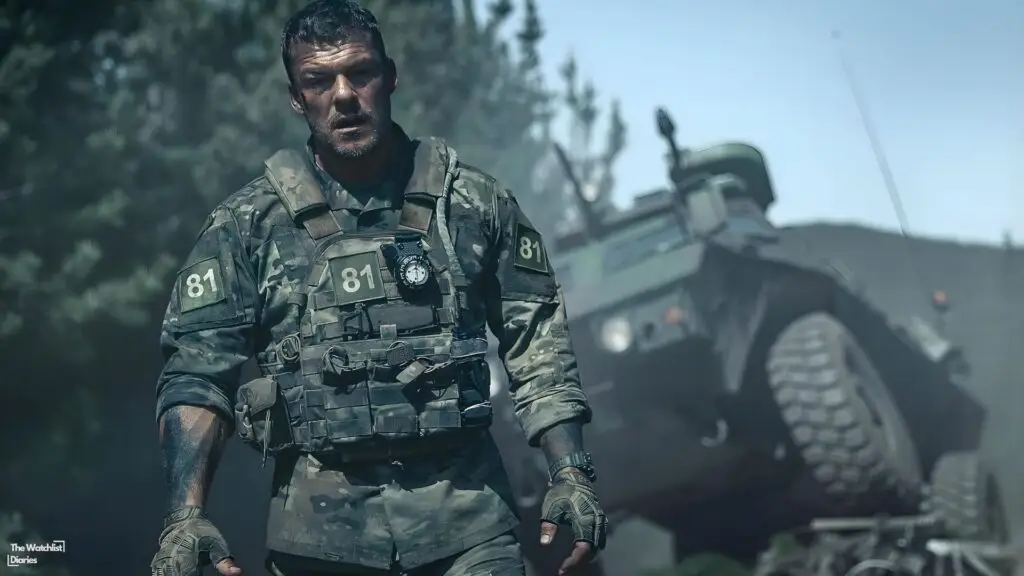
Alan Ritchson Is Basically Playing a Human Tank
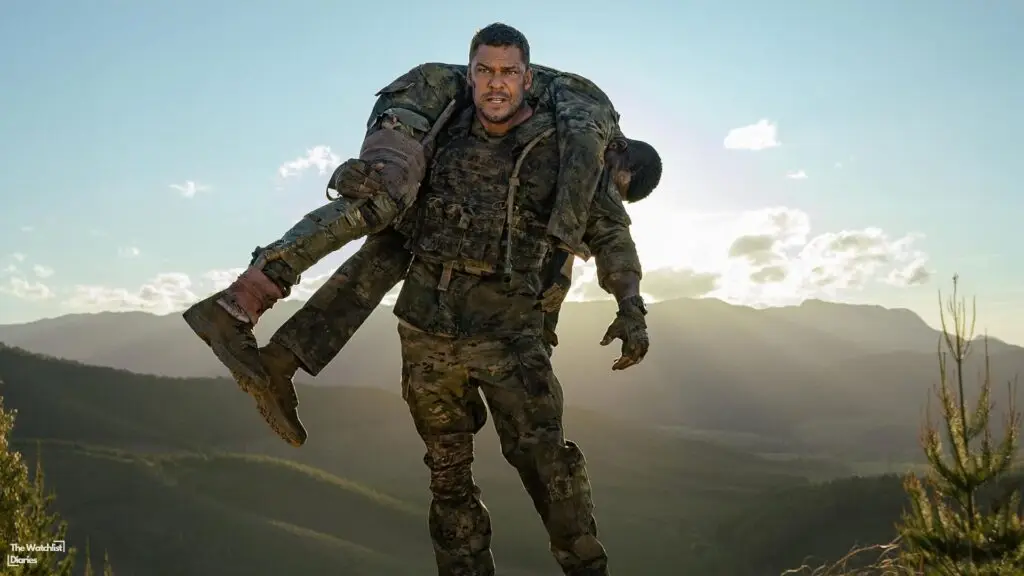
This is a movie built in two halves, but both halves rely on one core visual idea: Alan Ritchson looking less like a soldier and more like a military project someone forgot to classify.
The opening gives us the expected emotional setup. Two army brothers, easy banter, immediate chemistry, and the unmistakable feeling that one of them is not making it very far. Sure enough, Jai Courtney appears, reminds you that yes, that is still Captain Boomerang, and then exits exactly the way these characters usually do. This time he is not surviving missiles, and definitely not pulling off another McClane-adjacent miracle.
His brother, played by Ritchson, is referred to almost entirely by code number: 81. No dramatic naming effort, just military shorthand and trauma. He is carrying guilt after failing to save his brother and decides to complete the one thing they both wanted: become part of the Rangers, presented here with the usual movie language of “the most elite division” because military films apparently cannot introduce anything without adding maximum superlative.
Then comes the training montage.
An injured man with a damaged leg casually outperforming younger recruits. One trainee literally calls him Superman, which honestly feels accurate. Netflix had an open goal here and somehow still missed the obvious meta joke. A “slow down, Reacher” line would have landed instantly. Reacher fans will immediately recognize the same energy: a man entering every frame like physics is optional. Really Netflix? Not even a nod to him being Aquaman?

Yes, There Are Aliens, and That Is Where the Movie Improves
The dialogue during the training section is shaky. Some exchanges sound overly polished in that very familiar Netflix way, where every line feels written to survive half-attentive viewing on a phone. Matt Damon once talked about how streaming-era dialogue often gets simplified for distracted viewing, and moments here genuinely make that observation feel painfully accurate.
Small exchanges are too obvious. Emotional beats arrive early. Characters say exactly what they feel before the audience even gets a chance to infer it. But strangely, once the movie embraces how ridiculous it is, those flaws become easier to accept.
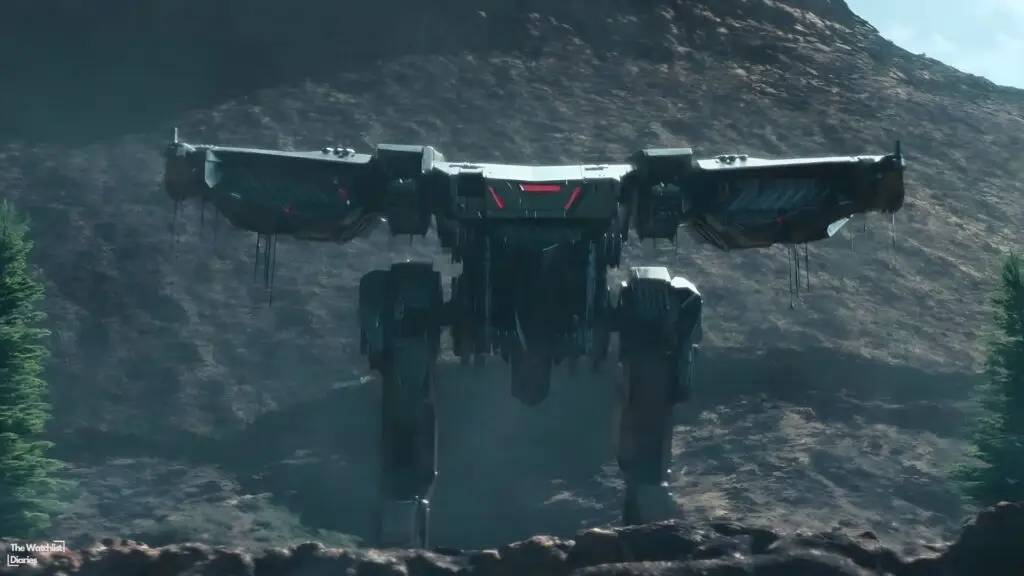
Because then aliens arrive. During the final Ranger selection test, the trainees are suddenly attacked by an alien machine. And from there, the movie stops pretending it is a military drama and becomes a survival-action spectacle involving lasers, missiles, scanners, shredded bodies, and one giant mechanical threat that behaves like someone fed a war drone too much caffeine. That tonal switch helps the film enormously.
The Best Line Comes Right When the Film Needs One
For all my complaints about the writing, there is one genuinely strong emotional beat. When 81 finally breaks down and says: “they gave me a medal for the worst day in my life.”
That line lands. It works because Alan Ritchson delivers it with exactly the amount of restraint needed. No overacting, no dramatic music doing the work for him. Just a solid moment inside a movie that otherwise treats subtlety like an optional side quest.
It almost feels like his own G.I. Joe: Retaliation type emotional beat dropped into a louder sci-fi frame.
Engineering Brain vs Movie Brain
A very strange thing happened while watching this film. For a few minutes, my engineering degree actually became relevant. The movie presents an alien machine that survives explosives, heavy assault, and repeated direct attacks, yet eventually loses to one borderline superhuman man making decisions that should absolutely not work under any stable mechanical model.
And to be fair, I understood what the film was trying to do. The idea itself is simple enough: clog the machine’s heat exhaust system, force an internal overload, and let overheating do the damage that conventional weapons could not. On paper, that is perfectly acceptable movie logic.
What did not quite survive scrutiny was everything around it. The placement, the force involved, how quickly the effect escalated, and the way the surrounding physics conveniently behaved exactly when the script needed them all felt wildly generous. Part of my brain was tracking stress points, heat transfer, structural vulnerability, and vehicle inconsistency. The other part accepted that this film clearly did not care. And honestly, once you surrender to that, it becomes easier to enjoy.
Because this is one of those movies where vibes matter more than system design. The machine has flaws because the movie needs flaws. Physics bends because the lead actor needs a hero moment. If you enter expecting internal scientific discipline, you will suffer. If you accept giant robot chaos, the film gives you enough payoff.
Will Netflix Make a Sequel?
Probably. This feels engineered for sequel conversations. The title alone sounds like something already built for a franchise slate, and if Netflix likes the engagement numbers, War Machine 2 feels inevitable.
Maybe next time 81 ends up in orbit. Maybe they double the machines. Maybe someone finally writes dialogue that sounds less like an internal algorithm approved it. But honestly, if they keep the same silly energy and improve the writing slightly, I would probably still watch it.
Final Verdict: Dumb, Loud, but Hella Fun!
Rating:
I am giving it a 3 out of 5. And yes, that rating still comes from someone who genuinely enjoyed watching it. Because enjoyment and quality are not always identical things.
I had to actively silence the part of my brain that kept insisting half the combat solutions made no sense, but the film still managed to keep me entertained all the way through. That matters.
If you enjoy high-stakes action, oversized sci-fi threats, and a lead actor whose entire screen presence feels like he was built in a classified lab, this is an easy weekend watch.
Should You Stream It?
If you have been missing the kind of action film that knows exactly how ridiculous it is and never apologizes for it, this one earns a place on your watchlist. It may not stay with you for weeks, but it does exactly enough to justify two hours on a relaxed evening. If you watch it, tell us one thing: were you fully on board with the madness, or did your brain also keep filing formal complaints during the robot scenes? And if Netflix does announce a sequel, would you actually return for round two?
Drop your thoughts in the comments and let us know where you stand. If you enjoy discussions like this, explore more reviews and pop culture deep dives here on The Watchlist Diaries.
You may also like