Kathar Katha Short Film Review – A Haunting, Poignant Tale That Deserves Your 26 Minutes
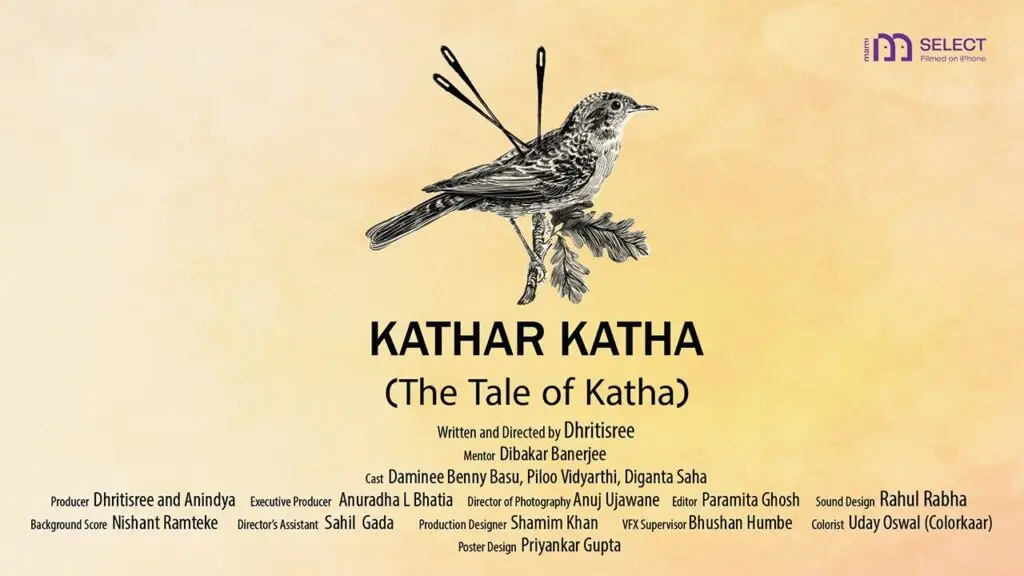
Every once in a while, a film arrives without any grand marketing campaign or social media buzz and quietly leaves a lasting impression. Kathar Katha is one such gem.
Selected under the MAMI Film Festival‘s “Shot on iPhone” category, the Bengali short film is proof that compelling storytelling doesn’t need a massive budget or star-studded promotions. It simply needs a powerful idea, honest performances, and filmmakers who know exactly what they want to say.
Ironically, I discovered Kathar Katha through one of the most unexpected recommendations. Anindya, one of the film’s co-producers, reached out to me and requested that I watch the film and share my honest opinion. I kept postponing it until the FIFA World Cup 2026 final was over, and when I finally pressed play, I found myself wondering why I hadn’t watched it sooner.
Some films entertain you. Some unsettle you. Kathar Katha does both.
Cast & Crew
- Director: Dhritisree Sarkar
- Starring: Daminee Benny Basu, Piloo Vidyarthi, and others
- Produced by: Dhritisree Sarkar & Anindya
- Mentor: Dibakar Banerjee
What’s It About?
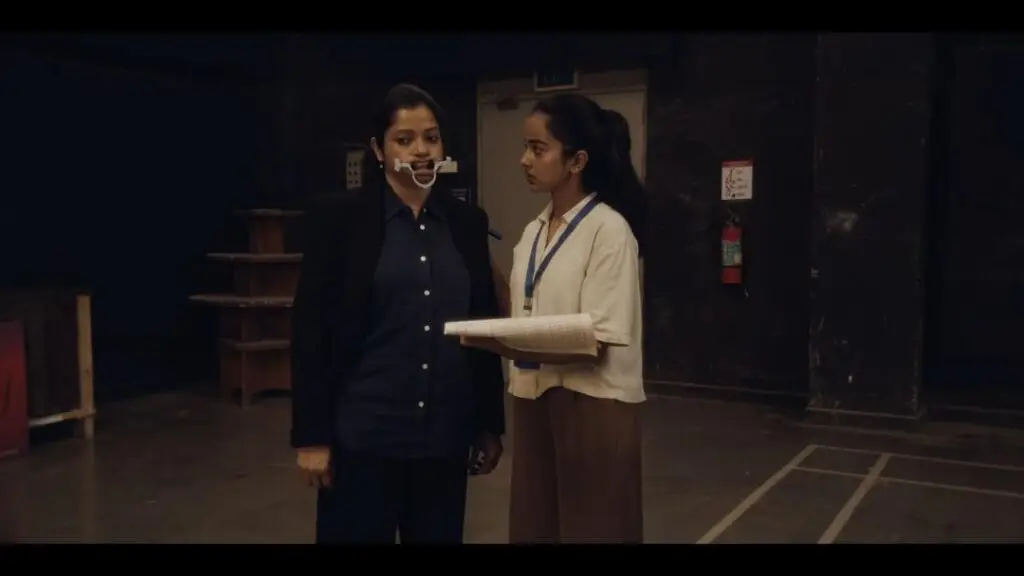
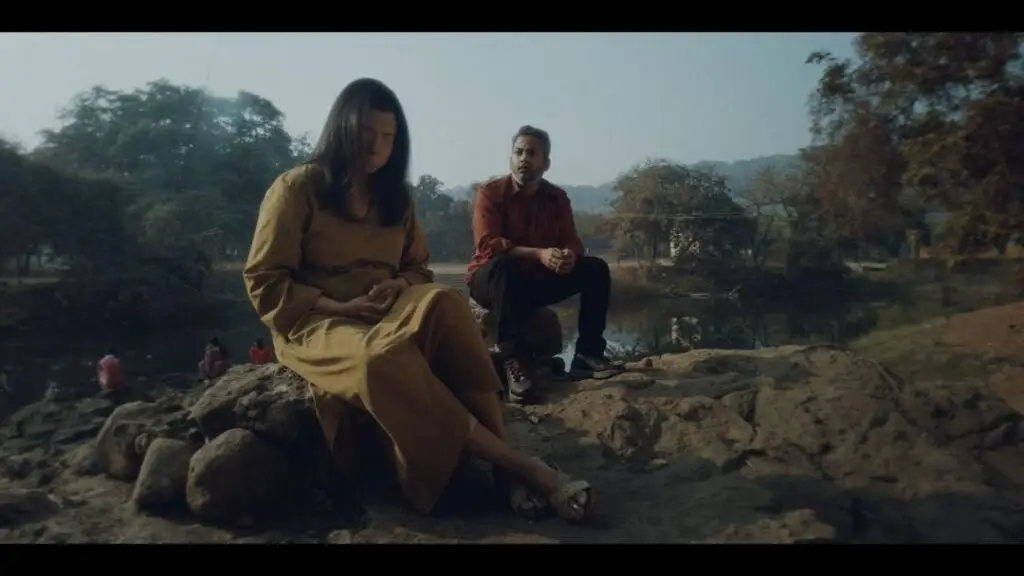
Kathar Katha follows the life of Katha, a woman constantly balancing multiple identities.
She is a homemaker, a news presenter, a singer, a wife, and a mother who spends her life giving a voice to others. But everything changes when she is diagnosed with a rare condition called Oral Aperture Obliteration, a disease that gradually robs her of something she has always taken for granted, her ability to communicate.
The film isn’t merely about a medical condition. It’s about identity, fear, isolation, and what happens when a person slowly begins to lose the very thing that defines them.
The premise may sound simple on paper, but the execution transforms it into an emotionally haunting experience.
I am diving right into the review now.
What Works?
Daminee Benny Basu Hits a Home Run
The biggest strength of Kathar Katha is undoubtedly Daminee Benny Basu.
Those who grew up watching Bengali television will instantly recognize her from Gaaner Opare, while others may remember her memorable performance in Kaushik Ganguly‘s Jyeshthoputro. But this film demands something entirely different, and she rises to the challenge effortlessly.
What’s remarkable is how much she communicates without relying on dialogue.
As Katha’s illness progresses, her expressions become quieter, her eyes begin carrying the emotional weight of every scene, and the silence itself becomes a form of storytelling.
One particular sequence, where Katha struggles while feeding her child as her vision starts deteriorating, hit me the hardest. There are no dramatic background speeches or over-the-top emotional outbursts. It’s simply a mother, trying to hold on to normalcy while her world slowly slips away.
It’s heartbreaking, believable, and beautifully performed.
She even sings a Rabindra Sangeet in the film, wait for the end credits roll.
A Visual Treat Shot Entirely on an iPhone
Had someone not told me beforehand that the film was shot entirely on an iPhone, I probably wouldn’t have guessed. The cinematography is genuinely impressive. Every frame feels carefully composed rather than experimental for the sake of showing off the technology. Whether it’s the intimate indoor scenes or the eerie final act, the visual language remains consistent and cinematic throughout. One of my favourite shots comes during a corporate boardroom meeting. The camera subtly shifts its focus toward Katha, instantly changing the emotional perspective of the scene without saying a word.
Had someone not told me beforehand that the film was shot entirely on an iPhone, I probably wouldn’t have guessed.
The cinematography is genuinely impressive.
Every frame feels carefully composed rather than experimental for the sake of showing off the technology.
Whether it’s the intimate indoor scenes or the eerie final act, the visual language remains consistent and cinematic throughout.
One of my favourite shots comes during a corporate boardroom meeting. The camera subtly shifts its focus toward Katha, instantly changing the emotional perspective of the scene without saying a word.
Equally impressive are the closing sequences involving a mysterious ritual. They possess a scale and atmosphere that many independent feature films struggle to achieve despite having much larger budgets.
The Background Score Elevates Every Emotion
If the performances are the soul of the film, then Nishant Ramteke’s background score is its heartbeat.
I have often struggled to connect with short films because many of them feel like unfinished feature films squeezed into a smaller runtime.
Kathar Katha completely changed that perception.
The music never overwhelms the narrative. Instead, it quietly amplifies the growing anxiety, loneliness, and uncertainty surrounding Katha’s condition.
By the final act, the score becomes almost hypnotic, creating an atmosphere that stays with you long after the credits roll.
Piloo Vidyarthi Makes Every Minute Count
Although Piloo Vidyarthi appears only briefly, she leaves a strong impression.
Her mysterious presence immediately reminded me of the unsettling characters from Anurag Kashyap’s No Smoking. It’s the kind of role that could have easily felt gimmicky, but she plays it with enough restraint to make it genuinely intriguing.
It’s a reminder that even small roles can become memorable when performed with conviction.
Storytelling That Respects the Audience
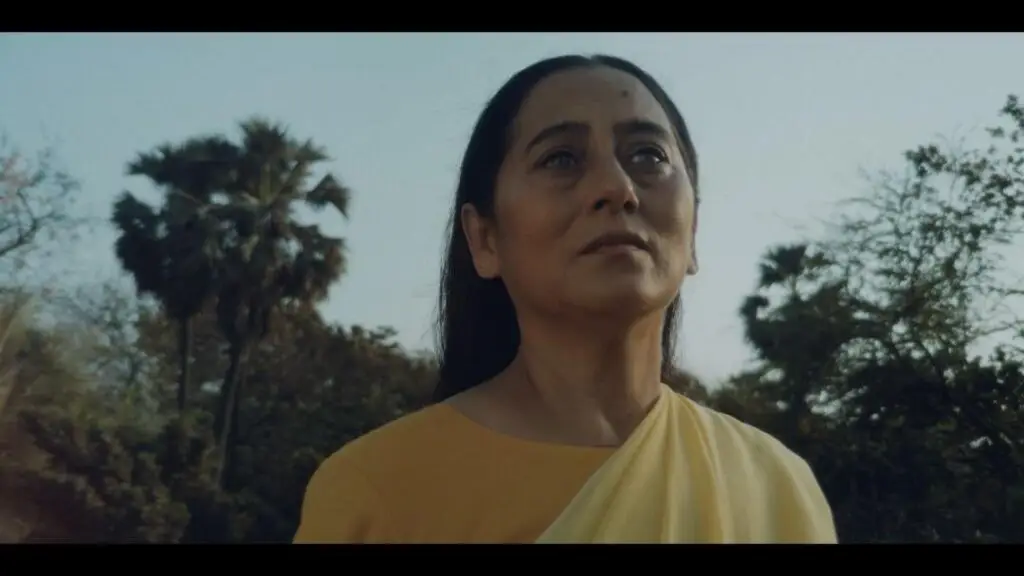
One aspect I appreciated throughout the film was its refusal to spoon-feed emotions.
Director Dhritisree Sarkar trusts the audience.
There are no unnecessary explanations or melodramatic monologues telling viewers what to feel. Instead, the film allows silence, visuals, and performances to carry the emotional burden.
That confidence makes Kathar Katha feel far more mature than many mainstream productions.
What Could Have Been Better?
Prosthetic Makeup Needed More Refinement
If I had to point out one noticeable weakness, it would be the prosthetic makeup.
Considering this is an independent short film with obvious budget limitations, the effort deserves appreciation.
However, in a few close-up shots, the prosthetics appear slightly artificial and momentarily pull you out of the experience.
Thankfully, it’s a minor issue and never affects the emotional impact of the film.
Twenty-Six Minutes Felt Too Short
Ironically, my biggest complaint isn’t really a complaint.
I simply wanted more.
By the time the story truly settled into its rhythm, the credits began rolling.
That’s perhaps the biggest compliment I can give the filmmakers.
The world of Kathar Katha feels rich enough to be expanded into a full-length feature. In fact, with the right budget and scale, it has the potential to become something along the lines of The Substance, not in terms of story, but in its willingness to explore body horror and psychological trauma through a uniquely human lens.
Final Words
Kathar Katha is one of those rare short films that proves that runtime has nothing to do with emotional impact.
It’s haunting without relying on cheap scares, emotionally devastating without becoming melodramatic, and visually ambitious despite being shot on an iPhone.
Powered by an exceptional lead performance from Daminee Benny Basu, confident direction by Dhritisree Sarkar, and an immersive background score, the film leaves behind questions and emotions that linger well after it ends.
If you’re someone who genuinely loves cinema, not just big-budget entertainers but stories that experiment, challenge, and surprise, this film deserves your time.
It’s available for free on YouTube.
So, stop scrolling, set aside 26 minutes, and watch Kathar Katha. Whether you’re Bengali or not (English subtitles are available), chances are you’ll come away impressed.
Rating:
What do you think about this film? Do let us know in the comments below.

Avik
More From Avik




You may also like